
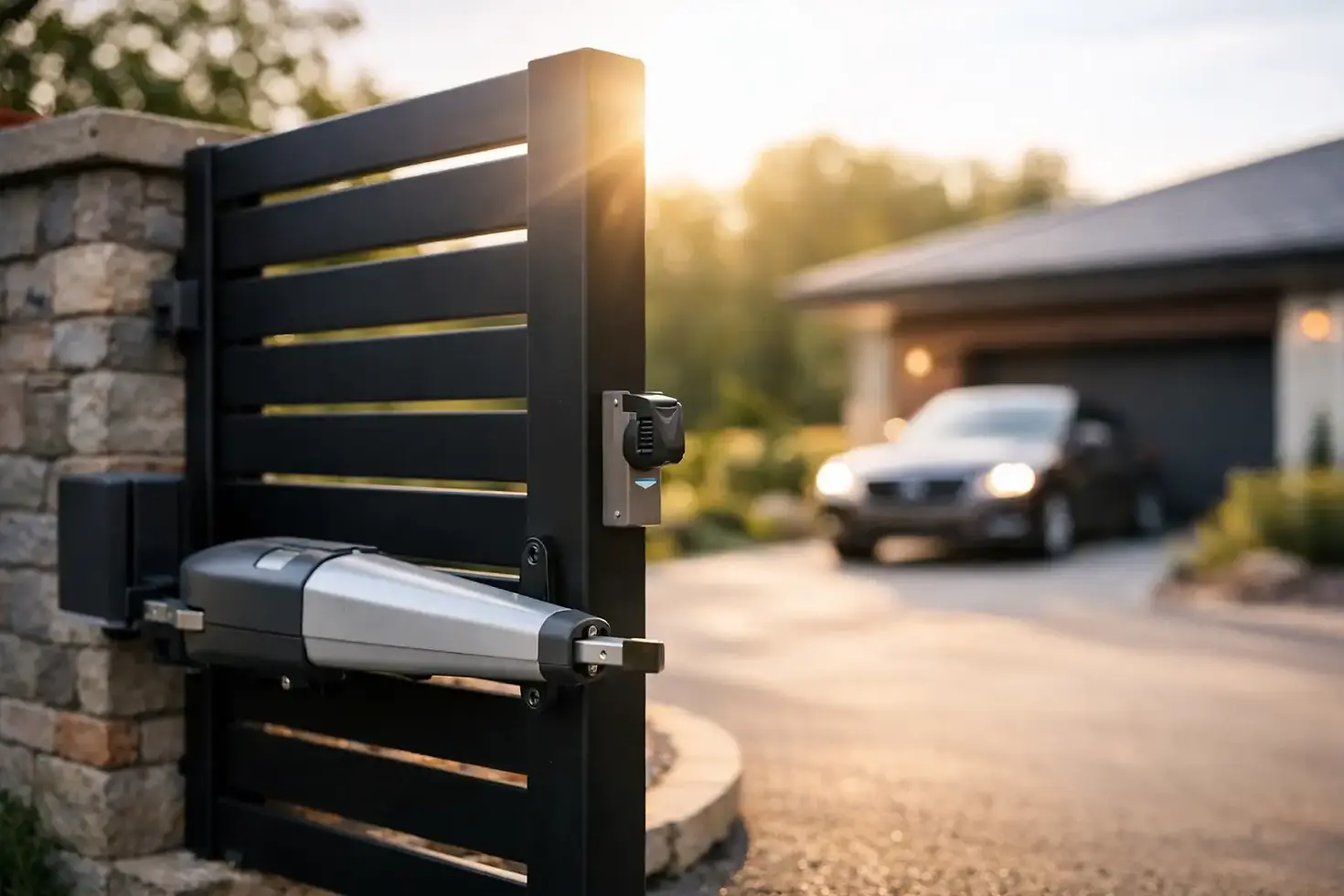
How to Automate Driveway Gates for Your Home
A heavy gate should not be the reason you stay in the car while rain blows across the drive, or leave the entrance unsecured because you are only popping out for five minutes. When you automate driveway gates, everyday access becomes easier while your property gains a more controlled, reassuring first line of security.
For homes across Costa Blanca, Costa Cálida and Alicante, automation is rarely just about convenience. It can make arriving with shopping, children, pets or guests far simpler, while helping owners protect vehicles, gardens and the home beyond the gate. The right system should suit the way you use your property, not force you to adapt to it.
Start with the gate you have - or the entrance you want
An existing manual gate can often be automated successfully, but it must first be assessed for condition, weight, movement and structure. Motors cannot compensate for a gate that drags on the ground, has loose hinges or runs unevenly. Before automation is fitted, the gate should open and close smoothly by hand, with properly aligned posts, hinges or track.
This is also the point to decide whether the current gate is genuinely right for the property. A tired timber gate, a narrow entrance or a design that gives little privacy may be an opportunity to install a made-to-measure replacement rather than adding equipment to a gate nearing the end of its working life.
Sliding gates are a popular choice where a driveway runs close to a road or where there is insufficient room for gates to swing inwards. They travel sideways along a track or cantilever arrangement, keeping the drive clear. Double swing gates create a classic entrance and work well where there is space inside the boundary. A single gate can be an excellent practical option for narrower drives.
The best layout depends on the slope, available run-back space, road position, parking area and how people enter on foot. A gate that looks impressive but blocks a car at an awkward point, catches the ground or leaves no safe pedestrian route will soon become frustrating.
What an automated driveway gate system includes
A professional installation is more than a motor fixed to a gate. The motor must be correctly matched to the gate’s weight, length and expected use. A lightweight aluminium gate needs a different approach from a wide, solid steel sliding gate, particularly where the gate may be used several times a day by a family, guests or tradespeople.
Most automated systems include the operator or motor, a control panel, remote controls and safety devices. Depending on the property, the system can also incorporate a keypad, intercom, video entry unit, pedestrian button and mobile phone control. These options allow you to choose who comes in without having to walk down the drive or hand out remotes to everyone who needs access.
Photocells are particularly important. They create an invisible safety beam across the opening, so the gate can stop or reverse if a vehicle, person or pet enters its path. Other useful protections can include safety edges, warning lights and carefully set force limits. The precise equipment depends on the gate type and site conditions, but safety should be designed into the installation from the beginning rather than treated as an extra.
A manual release is essential too. In the event of a power cut, you need a straightforward way to operate the gate safely. For homes that are vacant for part of the year, this gives added peace of mind to neighbours, family members or maintenance teams who may need access.
Choosing the right way to control access
Remote fobs remain a simple, dependable choice for most households. They are convenient from the car and easy to provide to family members. A keypad is useful for regular visitors, cleaners or gardeners because codes can be changed when arrangements change. It avoids the need to recover a physical remote when a contractor’s work is complete.
Intercom and video entry systems offer a greater level of control. They allow you to speak to a caller before opening the gate, which is valuable for villa owners with long drives or entrances out of sight of the house. Video can also help you identify delivery drivers or unexpected callers without approaching the gate.
App-based control can be useful for second-home owners and busy households, especially when you want to open the gate for somebody while away from the property. It does, however, rely on a suitable internet connection and should complement, rather than replace, reliable local controls. A well-planned system gives you more than one practical way to enter and exit.
Design matters as much as automation
A driveway gate is one of the first things visitors see. It should provide security without making the property feel out of character. Aluminium and galvanised steel are strong, durable choices for the Spanish climate, and both can be fabricated in styles ranging from clean contemporary lines to more traditional designs.
Privacy is worth considering early. Closely spaced horizontal panels, solid sections or integrated screening can reduce views into the drive and garden. More open designs can maintain visibility and a lighter feel, particularly on a frontage where you want the home to remain welcoming. There is no single right answer: the best balance depends on your street, landscaping and security priorities.
Colour and finish also make a visible difference. Matching the gate to roller shutter garage doors, fencing, shutters or exterior metalwork creates a more considered appearance. A bespoke gate is made just for your home, so proportions, infill style and opening configuration can be chosen to suit the entrance rather than settling for an off-the-shelf compromise.
Site preparation is where reliable operation begins
A dependable automated gate starts below ground and behind the scenes. Posts and foundations need to be secure enough to carry the gate and withstand repeated movement. Sliding gates require accurate track preparation or a correctly engineered cantilever system. Swing gates need stable posts, suitable hinge geometry and enough clearance throughout their arc.
Electrical planning matters just as much. The cable route should be protected and discreet, while the control equipment needs a suitable location that remains accessible for future servicing. If an intercom, keypad or lighting is planned, it is sensible to coordinate all wiring before paving, walls or landscaping are finished.
Driveway gradients and drainage deserve attention. Standing water, loose gravel in a track and vegetation left to obstruct photocells can affect operation over time. Coastal and inland Spanish properties also experience intense sun, dust, wind and occasional heavy rain, so components and finishes should be selected and installed with local conditions in mind.
Safety for children, pets and visitors
An automated gate is a moving piece of equipment, not simply an electronic lock. It must be set up with the people who use the entrance in mind. Children should never be able to play around a moving gate, and pets need protection from closing areas and gaps where they could become trapped.
A pedestrian gate is often a wise addition. It gives family and visitors a separate route in and out, reducing the temptation to walk through while the driveway gate is moving. If a separate pedestrian access is not possible, the controls and safety systems need extra careful planning.
Your installer should test the safety devices during commissioning and explain exactly how the system works, including the manual release. It is worth making sure every regular user understands that remotes are not toys and that the gate should always be kept within view while it is operating.
Maintenance keeps automated gates dependable
Like any mechanical entrance system, an automated gate benefits from regular care. The gate itself should be checked for alignment, wear, corrosion, loose fittings and smooth travel. Sliding tracks need to be kept clear of stones, leaves and debris. Hinges, wheels and moving parts may need adjustment or lubrication according to the system fitted.
The automation also needs periodic inspection. Photocells should be clean and correctly aligned, remote batteries replaced when needed, and safety functions tested. A gate that starts to move more slowly, makes unusual noises or stops intermittently should be inspected promptly rather than repeatedly reset or forced.
Preventative maintenance is especially valuable for holiday homes. A small adjustment made early can prevent a failed motor, damaged gate or access problem when you are arriving late at night with a car full of luggage. It also helps preserve the quiet, smooth operation that makes automation feel like a genuine upgrade.
A complete installation makes the difference
The strongest result comes from treating the gate, automation and access controls as one project. At The Gate & Garage Door Company Spain, this means considering measurements, materials, fabrication, foundations, installation and aftercare together. It avoids the common problem of a beautiful gate paired with an unsuitable motor or safety equipment added as an afterthought.
Before choosing a system, think about who uses the entrance, how often it operates, where vehicles wait, whether the property is occupied all year and the level of privacy you want. Photos of the entrance, a site visit and clear discussion of daily routines help shape an installation that feels natural from the first use.
A well-made automated gate should quietly earn its place every day: opening at the touch of a button, closing securely behind you and giving your home the polished, protected entrance it deserves.


Comments