
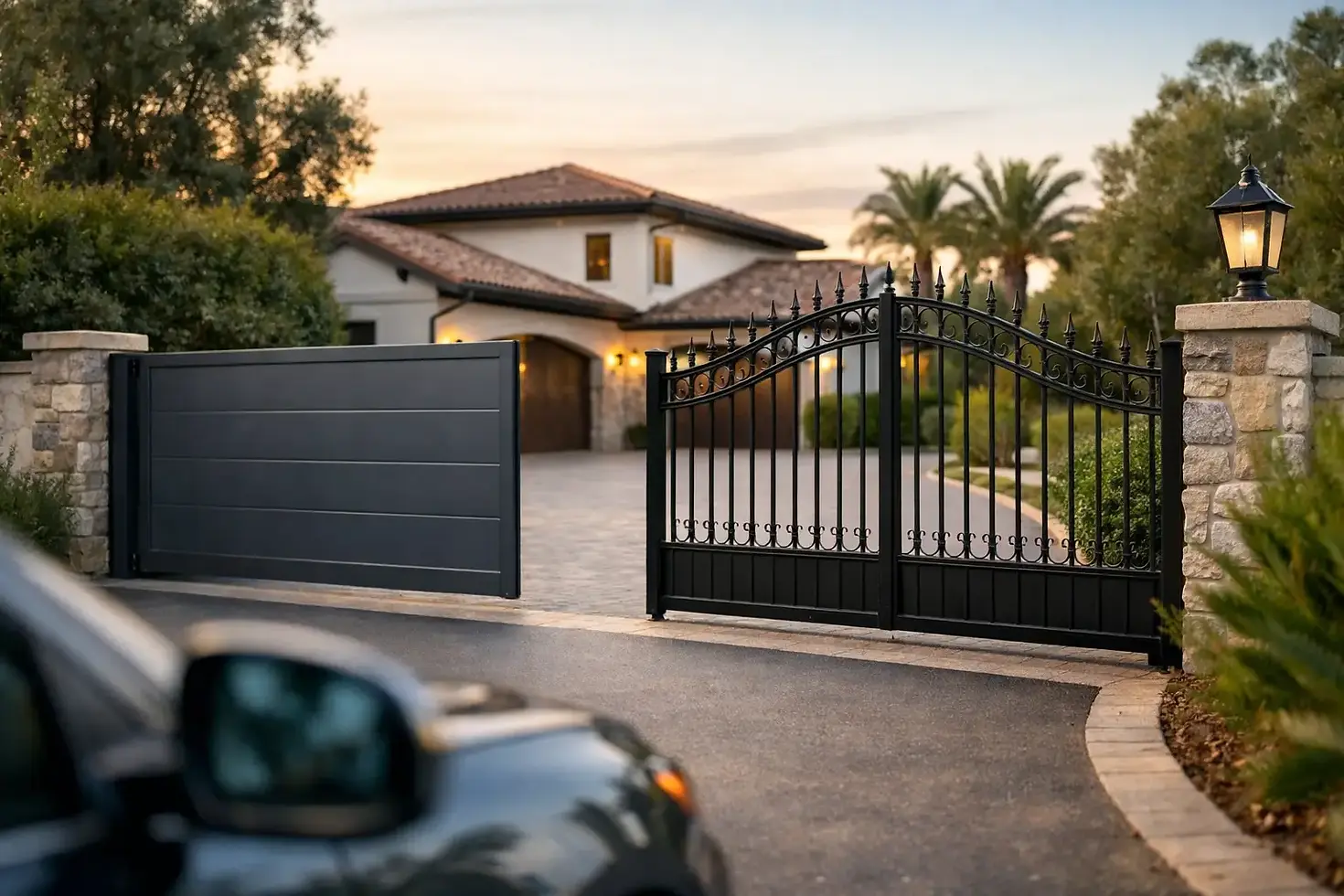
Driveway Gates That Suit Your Home and Life
A driveway entrance should not leave your home exposed, force you out of the car in the rain, or look like an afterthought. Well-designed driveway gates create a clear, secure boundary while making everyday arrivals and departures easier at the touch of a button. For villas, permanent homes and holiday properties across the Costa Blanca and Costa Cálida, they can also bring welcome privacy and a more finished appearance from the street.
The best solution is rarely an off-the-shelf gate. Every entrance has its own width, slope, available space, wind exposure and style. A gate that is made just for your home will operate properly, sit comfortably within the property frontage and give you the level of access and security your household needs.
What Should Driveway Gates Do for Your Home?
A gate has a practical job to do, but it is also one of the first things visitors see. It should protect the entrance without making daily life awkward. That balance matters whether you are securing vehicles, keeping children and pets safely within the grounds, improving privacy from a busy road or simply replacing tired, difficult manual gates.
For many homeowners, automation is the change they notice most. Instead of stopping, unfastening a gate and driving through before repeating the process, you can open and close the entrance remotely. That is especially useful late at night, during heavy rain, or when returning with shopping, children or luggage. A properly specified automated system also gives you greater control over who enters the property.
Appearance matters too. Modern aluminium and galvanised steel driveway gates are available in a wide choice of colours, panel styles and finishes. They can complement clean-lined contemporary architecture, traditional Mediterranean villas, rendered boundary walls or existing garage doors. The aim is not to make every entrance look the same. It is to create one that looks as though it belongs there.
Choosing the Right Opening Style
The right gate type depends first on the space available inside and outside your entrance. This is why an on-site assessment is valuable before a design is agreed.
Sliding gates for restricted space
A sliding gate travels sideways along the boundary, making it a strong option where the driveway rises immediately behind the entrance or where there is limited room for gate leaves to swing inward. It can work particularly well on wider openings and properties beside roads where an outward-opening gate would be unsuitable.
The trade-off is that a sliding gate needs clear run-back space along one side of the entrance. The ground, track or cantilever arrangement and supporting structure must also be planned carefully to achieve smooth, reliable movement. A gate that looks good but has not been designed around the site can become difficult to use over time.
Double gates for a traditional entrance
Double gates create a balanced, classic look and are often ideal for standard-width driveways. The two leaves meet in the middle and can be manually operated or automated. They suit many villa entrances and offer plenty of scope for solid panels, slatted designs, decorative details and matching pedestrian access.
They do need enough clear space to open inward. On a steep or uneven driveway, this needs particular attention. The gate leaves must be positioned and engineered so they do not catch on the ground or place unnecessary strain on the automation.
Single gates for side access
A single pedestrian gate is often the missing detail in an otherwise well-planned entrance. It gives family members, guests, gardeners and delivery drivers a safe way to enter without opening the main driveway gates. Matching it to the vehicle gate creates a tidy, coordinated perimeter and can reduce unnecessary wear on the main system.
Materials Built for Spanish Conditions
The climate in Alicante and the surrounding coastal areas is kind to outdoor living but demanding on exterior metalwork. Strong sun, salt in the air near the coast, wind, dust and occasional heavy rain all affect the finish and long-term performance of a gate.
Aluminium is a popular choice because it is lightweight, corrosion-resistant and suited to contemporary designs. Its lower weight can also be beneficial for automation, particularly on wider gates. Galvanised steel provides excellent strength and is a dependable choice for substantial structures and designs requiring a more solid feel. The right material depends on the opening size, design, desired finish and the conditions at your property.
A durable coating is as important as the metal beneath it. A quality powder-coated finish helps the gate retain its colour and protects the surface from weathering. Choosing a shade that works with window frames, garage doors, walls and fencing creates a more considered result. Anthracite grey remains popular, but black, white, wood-effect finishes and bespoke colours can all be the better choice depending on the home.
Privacy, Visibility and Security Need Balance
Solid-panel driveway gates offer greater privacy and can screen vehicles, outdoor areas and the entrance from passing view. They are a sensible option for busy streets, properties with close neighbours or owners who want a more enclosed feel. However, a fully solid design may block useful sightlines when pulling out onto a road.
Slatted or partially open designs allow light and visibility while still providing a clear physical boundary. The spacing can be selected to give more privacy from a distance without making the entrance feel closed in. Decorative openwork styles can suit traditional homes, but they naturally provide less screening.
Security is about more than choosing the most imposing design. Strong posts, dependable hinges or running gear, secure latching, correctly fitted automation and professional installation all matter. The gate should close reliably, resist unnecessary force and work consistently rather than becoming something you hesitate to use. When automation is included, safety features such as photocells and obstacle detection are vital to help protect people, pets and vehicles during operation.
Getting Automation Right From the Start
Electric driveway gates should feel simple to use, but the system behind them needs careful specification. Motor power, gate weight, opening style, use frequency and local conditions all influence the equipment required. A light aluminium gate used a few times a day has different requirements from a large steel sliding gate at a busy family home.
Remote controls are only one part of the setup. Depending on your needs, access can be managed through keypads, intercoms, pedestrian release buttons or other entry controls. Battery back-up may be worth considering where power interruptions are a concern, while manual release provision is essential so the gate can be operated safely if needed.
Do not treat automation as an add-on after the gate is fitted. The gate structure, foundations, posts, cable routes and safety devices should be planned as one system. This produces a neater installation, avoids costly alterations later and gives the motor the stable platform it needs for reliable operation.
Why Made-to-Measure Installation Matters
A few centimetres can make a significant difference at a driveway entrance. Uneven ground, walls that are not perfectly square, hidden drainage channels, existing services and awkward turning space are all common realities. Measurements taken properly before manufacture prevent the compromises that often come with adapting a standard-size product to a non-standard opening.
At The Gate & Garage Door Company Spain, gates are designed around the individual property, with fabrication, installation, automation and ongoing maintenance considered together. This gives homeowners one experienced point of contact from the first design discussion through to aftercare.
Professional fitting also protects the investment. Posts must be secure, moving parts accurately aligned and safety equipment tested. Once installed, periodic maintenance helps keep hinges, tracks, motors and safety controls working as intended. This is particularly worthwhile for automated systems that are used every day or exposed to coastal conditions.
Questions to Ask Before You Choose
Before committing to a design, think about how the entrance is used rather than only how it looks. Consider who needs access, where cars wait while the gate opens, whether a pedestrian entrance is required, how much privacy you want and whether the driveway slopes. If you are improving a holiday home, remote access and dependable locking may be higher priorities. For a full-time family home, frequent use, child safety and quick daily operation may lead the decision.
It is also worth planning the whole frontage. Matching fencing, a pedestrian gate and a roller garage door can turn several separate elements into one smart, secure exterior. Even if work is completed in stages, selecting compatible colours and styles from the beginning keeps the finished property looking intentional.
A driveway gate should make coming home feel easier, safer and more private. Start with the way you use your entrance, then choose a made-to-measure design and installation that will continue to serve the home well for years to come.


Comments