
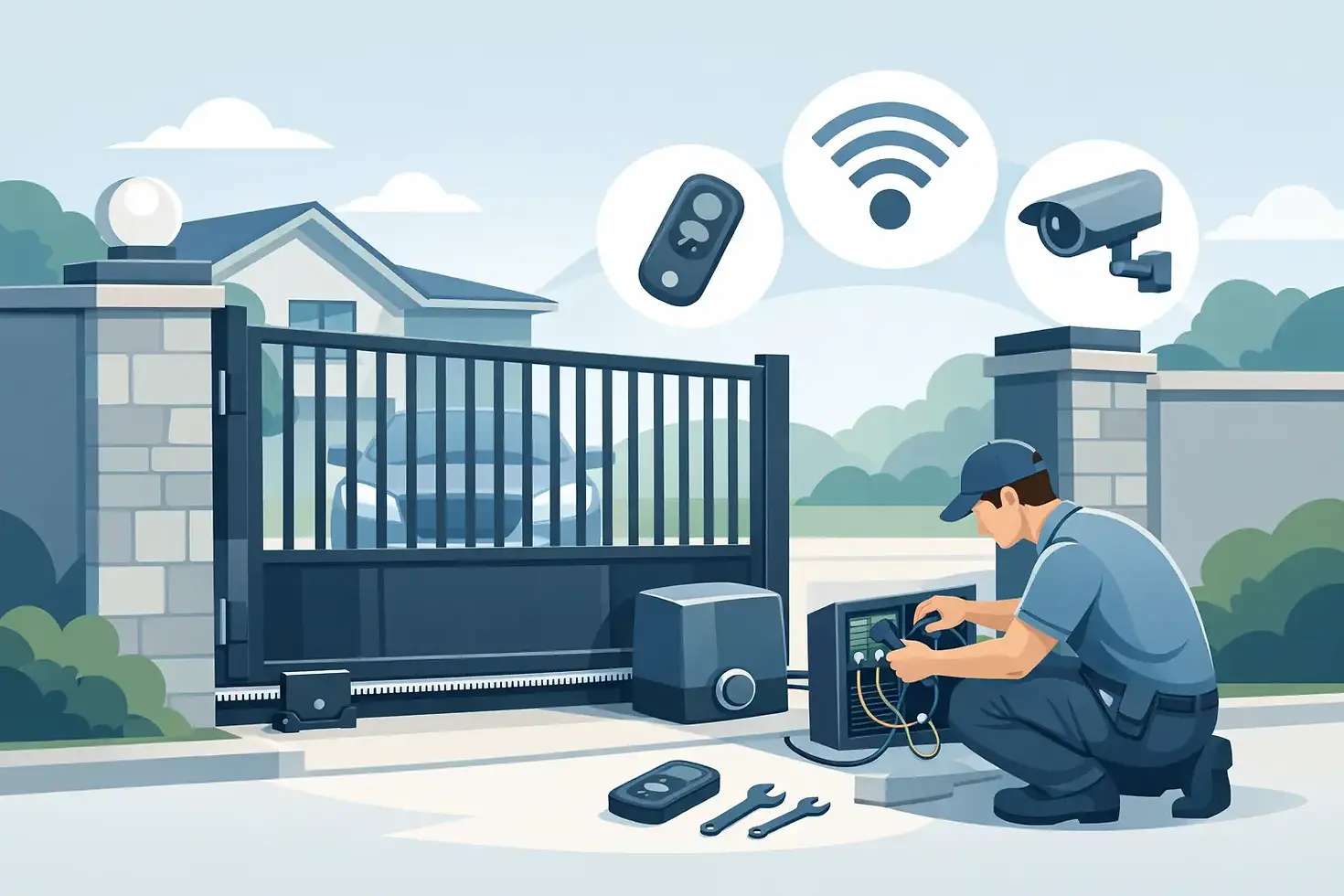
Automatic Gate Opener Installation Done Right
A driveway gate should not make you stop in the road, climb out in summer heat or struggle with a heavy leaf in the wind. Automatic gate opener installation changes that everyday experience with control at the touch of a button, but the motor is only one part of a safe, reliable entrance. The gate itself, the ground beneath it, the power supply and the safety equipment must all work together.
For homes across Costa Blanca, Costa Cálida and Alicante, this matters particularly. Salt air, strong sunshine, occasional heavy rain and uneven or sloping driveways can expose weak materials and poor fitting very quickly. A properly planned system gives you convenience, privacy and security without compromising the appearance of your home.
Start with the gate, not the opener
It is tempting to choose an automation kit first. In practice, the right starting point is a careful assessment of the existing gate or the design of a new one. An opener can only perform as well as the gate it is moving.
A swinging gate needs sound posts, hinges that move freely and leaves that are straight, stable and correctly aligned. If the gate catches on the ground, sags towards the centre or requires a hard push to open manually, fitting a motor will not cure the fault. It will place extra strain on the equipment and can lead to noisy movement, premature wear and avoidable call-outs.
Sliding gates have different requirements. The track or cantilever arrangement must be level, the rollers must be suited to the gate’s weight, and the opening run must be clear. A sliding gate is often an excellent choice where a driveway slopes upwards behind the entrance or where space is limited, but it needs room along the fence line for the gate to travel.
The material and construction are equally important. Aluminium offers a smart, low-maintenance finish and is well suited to coastal locations. Galvanised steel provides strength for larger or more security-focused installations. Both can be made to suit the property, from clean contemporary lines to more traditional designs. The aim is not simply to fit a motor to a gate, but to create an entrance made just for your home.
Choosing the right automatic gate opener installation
There is no single best motor for every driveway. The correct choice depends on gate type, weight, width, frequency of use and the layout of the entrance.
For double or single swinging gates, common options include articulated-arm motors, underground operators and linear ram motors. Articulated arms are visible but practical, often working well with wider posts and existing gates. Linear rams are neat and powerful, provided the gate geometry is suitable. Underground motors offer a discreet finish because the mechanism is concealed below the hinge point, although drainage and access for future servicing need careful attention.
For sliding gates, a ground-mounted motor drives a toothed rack fixed to the gate. This is a dependable solution for wide openings and heavier gates, but it must be correctly sized. Choosing a motor purely on its headline weight rating can be misleading. Wind loading, the condition of the running gear, the gate’s solid panels and daily use all influence the real demand on the operator.
A professional automatic gate opener installation includes more than selecting a motor with enough power. It considers opening speed, manual release during a power cut, the position of the control panel, how visitors will call at the gate and whether vehicles can wait safely off the public road.
Think about how the entrance is used
A family home may need several remote controls, a keypad for trusted visitors and a pedestrian gate for everyday access. A holiday property may benefit from video entry, app-based control or a code that can be changed between guests. If deliveries are frequent, an intercom or monitored release can save repeated trips to the entrance.
These choices are best agreed before cables are installed and posts are finished. Retrofitting is possible, but planning controls and access points from the outset keeps the finished entrance tidy and easier to use.
Safety is part of the system, not an extra
An automated gate has moving, heavy components. It must be installed with suitable safety measures for the specific design and setting. This is especially important where children, pets, pedestrians or visitors may be near the entrance.
Photocells are commonly positioned across the gateway to detect a person, vehicle or object in the gate’s path. Depending on the layout, additional photocells may be needed along the travel area, particularly with sliding gates or gates that open towards a confined space. Safety edges can provide further protection at crushing or trapping points, while the control unit should be set to detect resistance and stop or reverse appropriately.
The installer should also consider hinges, gaps between gate leaves, the area behind a swinging gate and any nearby walls, steps or planting. A gate that looks simple from the road can have several potential pinch points once it moves.
Controls should be located sensibly too. A keypad must be reachable without someone standing in the path of the gate, and a release button should not allow casual access from the street. A visible warning sign and reliable manual release are sensible details that help owners and visitors use the system safely.
Power, cabling and local conditions
A reliable electrical supply is essential. The cable route should be planned before paving, concrete or landscaping is completed, with protective ducting used where needed. The control equipment needs suitable protection from moisture and heat, while all electrical work should be carried out correctly for the installation and local requirements.
Solar power can be useful for entrances where mains electricity is difficult or costly to bring to the gate. It is not automatically the right answer for every property. Panel position, shade from palms or neighbouring buildings, battery capacity and expected daily use all need to be assessed. A gate that operates only a few times a day has very different energy needs from one serving a busy shared driveway.
Mediterranean weather deserves proper consideration. Coastal air can be hard on untreated metal fixings, and summer temperatures can affect exposed components. Good drainage around underground equipment, quality galvanising or aluminium construction, protected cables and properly sealed enclosures help the installation remain dependable year after year.
Installation day: what good workmanship looks like
A professional fitting begins with measurements, ground checks and a clear plan, rather than arriving with a standard kit and hoping it suits the site. Posts, tracks, stops and hinges are secured first, then the operator is mounted and aligned so it moves the gate smoothly without forcing it.
The electrical connections, safety devices and controls are then installed and tested. The gate should open and close evenly, stop where intended and respond correctly when a safety device is triggered. Limits must be adjusted so the leaves do not over-travel or strike stops with unnecessary force.
Before the job is handed over, you should be shown how to operate the remotes, keypad, intercom or app, how to use the manual release and what to do during a power cut. This is not a minor detail. A system is only convenient when everyone who needs it can use it confidently.
At The Gate & Garage Door Company Spain, the best results come from taking responsibility for the whole entrance: bespoke gate design, durable manufacture, expert fitting, automation and ongoing maintenance. That joined-up approach avoids the common problem of a beautiful gate being paired with unsuitable automation, or a capable motor being fitted to a poor gate.
Maintenance protects your investment
Automatic gates are built for regular use, but they are not fit-and-forget. Dust, leaves, insects and general debris can affect tracks and photocells. Gates can also move slightly over time as ground conditions change, particularly after heavy rain or on long, exposed driveways.
A simple visual check every few weeks is worthwhile. Keep the travel area clear, make sure photocells are clean and look for unusual noise, slowing movement or signs that the gate is no longer closing squarely. Do not keep using a gate that repeatedly stops, scrapes or needs force to move manually. Small alignment issues are easier and less expensive to address before they damage motors, racks or hinges.
Periodic professional servicing gives the system a more thorough inspection. This can include checking fixings, lubrication where appropriate, safety settings, electrical connections, battery condition and the operation of the manual release. It is also a sensible time to add a new remote, update entry codes or discuss improved access control.
Make the entrance work for your home
The best automated gate should feel like a natural part of the property: attractive from the road, easy to use when arriving home and reassuring when you are away. It should suit the driveway, the way your household lives and the level of privacy or security you want, rather than being chosen from a one-size-fits-all package.
If your existing gate is tired, difficult to operate or no longer gives the protection your home deserves, begin with a site assessment. A well-designed entrance can make every arrival calmer, keep the property looking cared for and provide the quiet peace of mind that comes from knowing the gate will do its job every time.


Comments